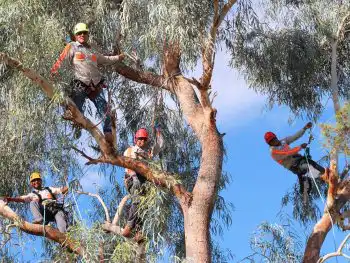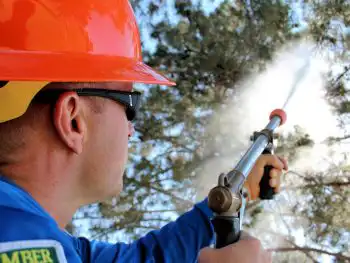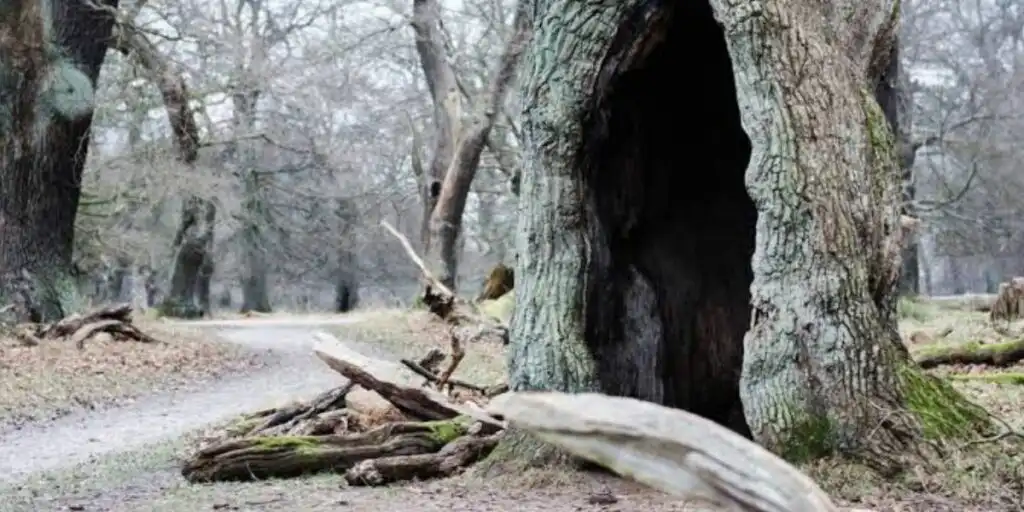
You notice an opening at the base of your mesquite and assume the worst. Like you, plenty of homeowners looking into tree removal in Phoenix may discover a hollow in a tree they thought was perfectly healthy.
But should a hollow tree be removed in every instance? The answer depends on how much sound wood remains and where the tree sits relative to anything it could damage. Design Tree Maintenance explains the factors arborists use to make that determination.
Why Trees Become Hollow
The center of a trunk is heartwood, dead tissue that provides structure. Around it sits sapwood, the living layer that moves water and nutrients up from the roots.
Fungi can enter through exposed wood and gradually consume the heartwood. That process leaves a cavity behind, but the sapwood can stay intact and keep supporting the canopy above it.
This is why a hollow tree trunk isn’t automatically a problem. Some trees continue growing for decades with a completely open center.
What a Hollow Can Cost a Tree
Decay reduces a tree’s structural integrity, but trees often add new growth to compensate. Whether or not that keeps pace determines the outcome.
Think of a hollow tree trunk as a pipe rather than a solid column. Thick walls handle loads, while thin walls buckle.
Homeowners considering working with a tree removal pro should expect a thorough evaluation, not a quick visual inspection. A tree risk assessment typically begins by measuring how much of the trunk’s diameter the cavity occupies.
Signs That Warrant an Inspection
Certain conditions suggest the remaining wood may not be holding, such as:
- Extensive cavity: The hollow spans roughly 33% or more of the trunk diameter.
- Mushrooms at the base: Fungal growths that indicate an active internal breakdown
- Deep bark cracks: Splits in the outer shell that suggest it’s failing under load
- Sudden lean: A shift in angle or soil mounding on one side of the roots
- Crown dieback: Thinning leaves or branches dropping from the top down
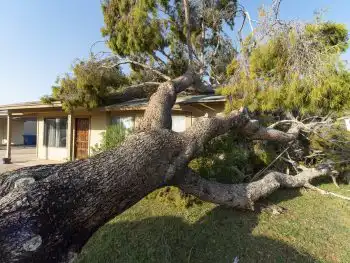
Location is also part of the tree risk assessment. If you’re wondering, “Should a hollow tree be removed?” the answer often depends on whether the tree stands near your house or at the back of an empty lot.
How Valley Conditions Factor In
Phoenix soil drains quickly and contains little organic matter, limiting how deeply many species root. Combined with a compromised trunk, shallow roots increase the risk of failure.
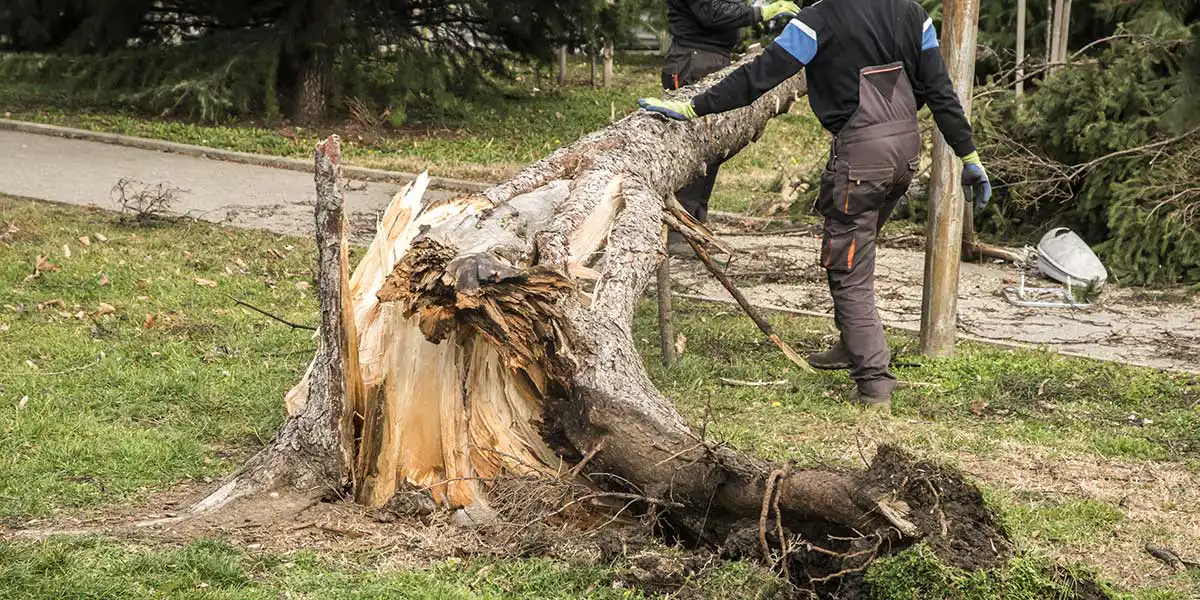
Monsoon winds and extreme summer heat further stress trees with internal decay. A tree that appears stable in spring may fail during an August storm.
What an Assessment Involves
A certified arborist measures the cavity against the trunk diameter and evaluates the remaining shell thickness. Root condition and canopy health also factor in.
A formal tree risk assessment evaluates the likelihood of failure and what the tree could strike if it falls.
Options Short of Removal
Not every compromised tree needs to come down. Depending on the findings, an arborist may recommend:
- Cabling or bracing: Support systems that stabilize weak unions
- Selective pruning: Reducing canopy weight the trunk has to carry
- Monitoring schedule: Regular reinspection to track changes over time
- Soil and root care: Treatment to strengthen what’s holding the tree up
Never fill a cavity with concrete. It traps moisture, damages surrounding tissue, and interferes with the bark growth that would otherwise seal the wound.
When Removal Becomes the Answer
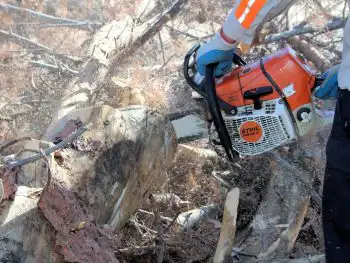
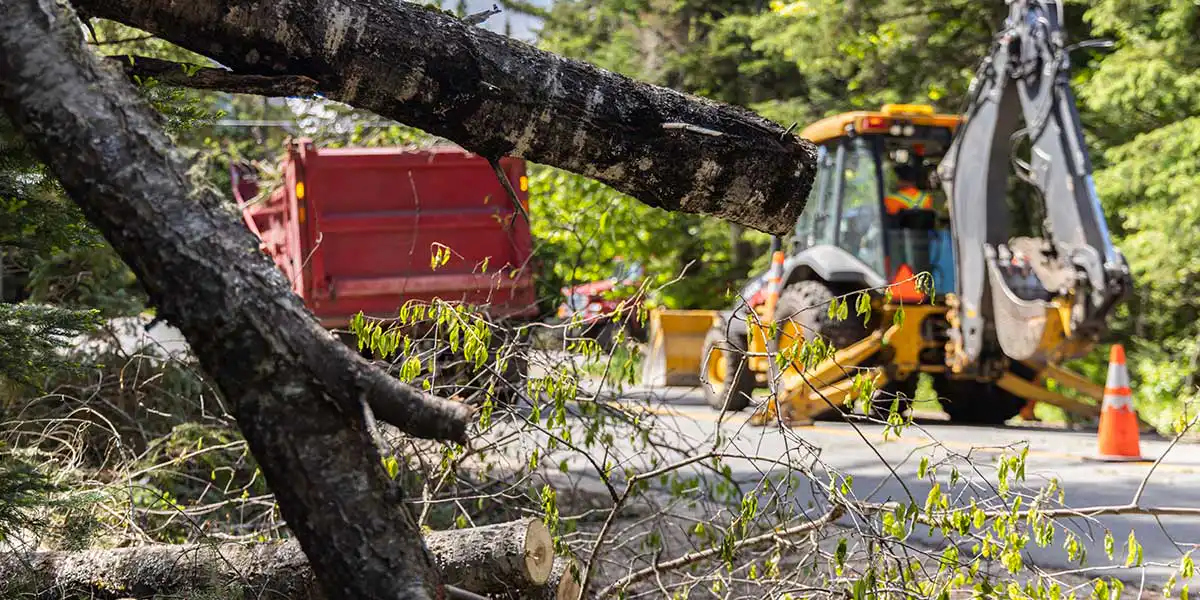
Some trees are past saving. A dead tree should come down promptly because dead limbs attract pests and can spread disease to nearby healthy trees. Removing a hollow tree also requires more care than removing a solid one because internal decay means the trunk may not hold rigging loads the way a crew would normally expect.
That unpredictability is why this work should be left to licensed professionals. Cutting a compromised trunk near a house or power line without proper equipment puts people and property at risk.
Get a Clear Answer About Your Tree
Anyone asking “Should a hollow tree be removed?” deserves an assessment rather than a guess, since the cavity alone rarely tells the whole story. At Design Tree Maintenance, we inspect hollow trees across the Valley and recommend the least invasive option the findings support.
We can also help homeowners determine whether they’re looking at a dead versus dormant tree, a distinction that often comes up during tree evaluations. Operating under ROC License Number 330404 with more than 30 years of local experience, we handle trimming, removal, stump grinding, and plant health care.
Call (623) 587-8170 to schedule an inspection in Phoenix, AZ.