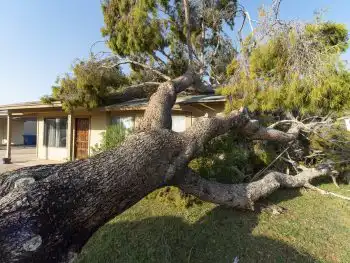
A windy afternoon leaves your backyard tree tilted at an unfamiliar angle. Before letting anyone come near it, you call an emergency tree service in Phoenix to discuss the change.
An unexpected lean can raise concerns about tree root failure and how urgently the tree needs attention. Design Tree Maintenance explains what can weaken its anchorage and which warning signs call for professional help.
What Happens When a Tree Loses Its Anchorage?
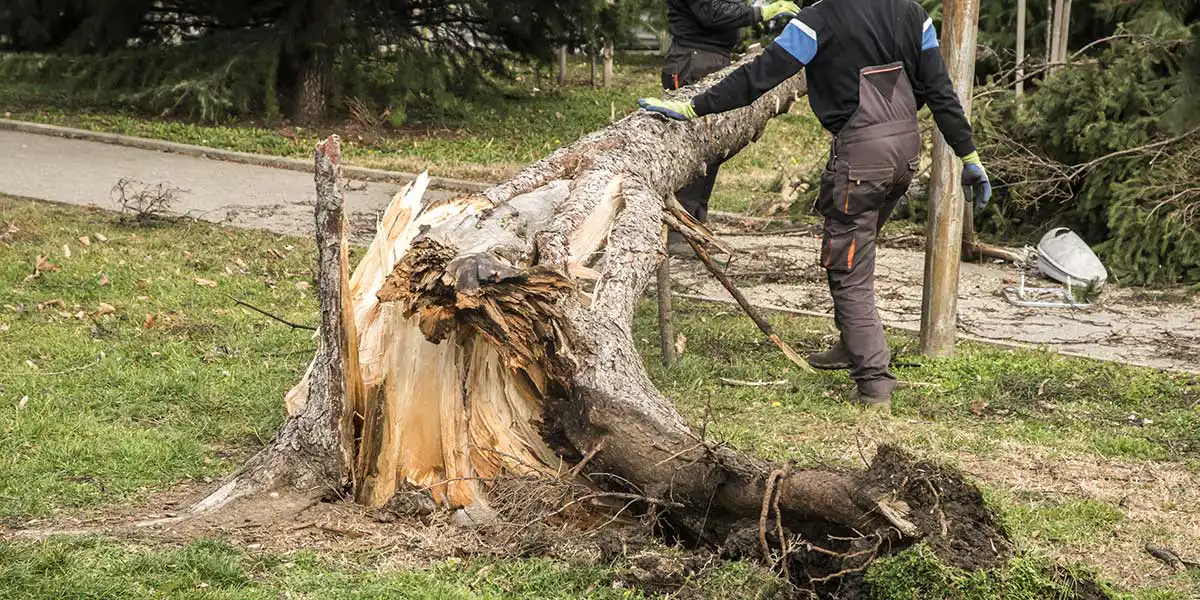
Tree root failure occurs when anchoring roots break or decay. It can also happen when the surrounding soil no longer holds them securely, leaving the tree less able to resist forces that could pull it over.
Tree root systems provide support while absorbing water and nutrients, but these functions can be affected in different ways. A tree may continue supplying its canopy even as its root stability declines. Understanding tree anatomy helps explain why healthy-looking foliage alone cannot confirm that the roots provide secure anchorage.
Why Can Underground Support Weaken?
The conditions below can damage roots or reduce the support provided by surrounding soil.
Changes in Water and Soil Conditions
Prolonged drought can damage roots, while saturated soil may provide less resistance when wind pushes against a tree. Soil compaction reduces the oxygen available to roots, limiting growth and making it harder for the tree to develop adequate support.
Excavation and Physical Injury
Trenching or nearby construction can sever roots that help hold a tree upright. The effect of this root damage depends on where the cuts occur and how much of the supporting network is lost, particularly when excavation happens close to the trunk.
Decay and Poor Establishment
Root rot breaks down tissue that contributes to a tree’s structural strength. Poor planting can also leave a tree inadequately anchored if its roots remain confined near the original planting hole rather than spreading into the surrounding soil as it grows.
Which Warning Signs Should You Watch For?
Possible warning signs of tree root failure include:
- A new lean: A recent change in the trunk’s angle, particularly after a storm
- Lifted ground: Soil rising on one side of the trunk
- Fresh soil cracks: New separations in the ground near the tree’s base
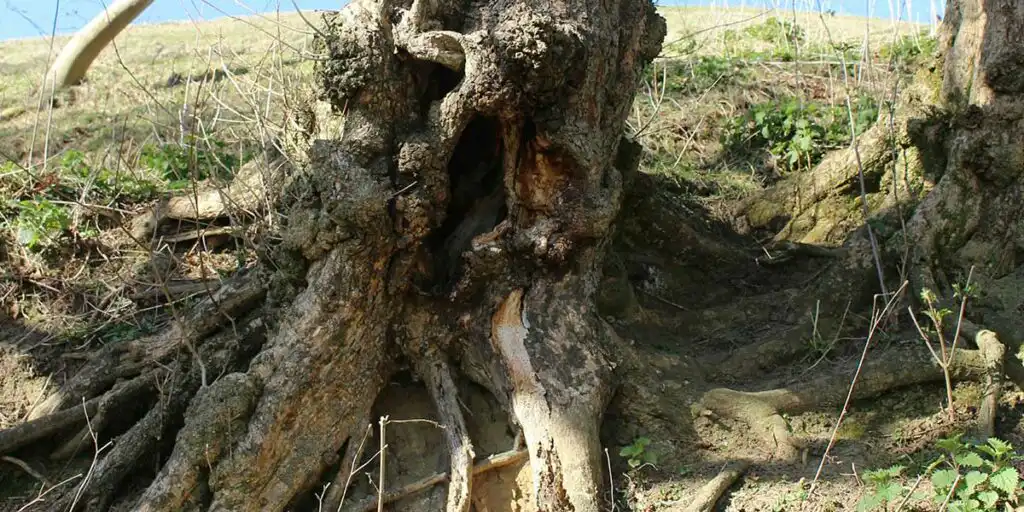
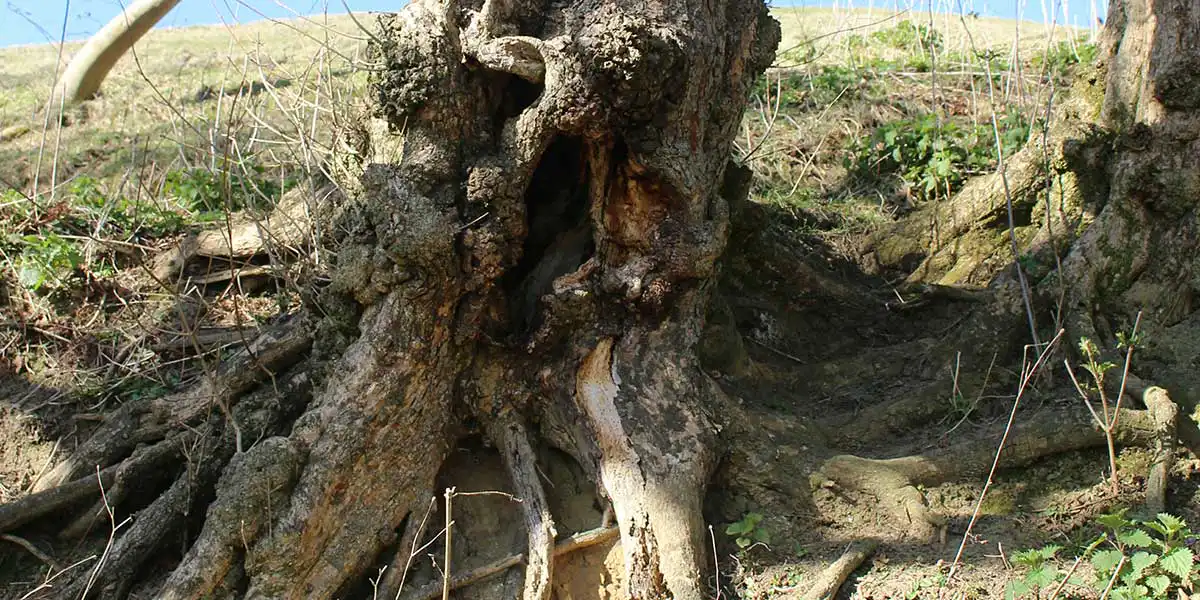
- Decay near the trunk: Deteriorating wood or fungal growth around the root flare
Contact a qualified arborist promptly to assess whether these changes indicate a loss of anchorage.
When To Seek Emergency Tree Care in Phoenix, AZ
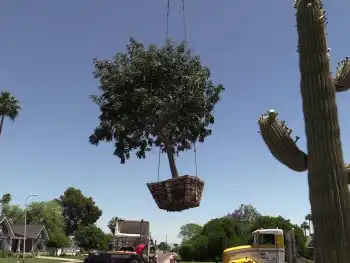
An unstable tree on a Phoenix property requires urgent attention if it threatens an occupied area or blocks a regularly used route. Leave stabilization or removal to trained professionals, as attempting to handle the tree yourself can increase the danger.
If downed or damaged power lines are near the tree, contact the utility company or emergency services immediately. Tree work must wait until the electrical hazard has been addressed and it is safe for crews to proceed.
How Does an Arborist Decide What Happens Next?
An arborist examines the root flare and surrounding soil for signs of movement or decay. They also review recent construction activity and irrigation changes to identify what may have weakened the tree’s support.
Their recommendation will depend on the tree’s condition and what could be struck if it falls. Correcting drainage or watering problems may be appropriate when sufficient anchorage remains, while substantial support loss may warrant removal. Fertilizer and pruning cannot reconnect broken roots or restore the anchorage they provided.
How To Protect the Root Zone Before Problems Develop
Support healthy root growth with these preventive steps:
- Plan irrigation: Match watering to the tree’s species and soil conditions rather than relying on a fixed schedule.
- Limit ground pressure: Keep heavy vehicles and stored materials away from the rooting area.
- Prepare for digging: Locate underground utilities and arrange tree protection before excavation begins.
- Maintain the soil level: Keep the root flare exposed instead of covering it with added soil or piled mulch.
Make root protection part of routine property care and any work planned near established trees.
Take the Next Step With Design Tree Maintenance
Founded in 1995 by Robert L. Kett, Design Tree Maintenance is a three-time Phoenix BBB Ethics Award winner. We provide arborist inspections to evaluate stability concerns and recommend care suited to each tree.
Emergency response is available when a situation poses an immediate threat. We also handle hazardous tree removal and storm cleanup to address the dangers of monsoon tree damage across the Valley.
If you suspect tree root failure on your property, call (623) 587-8170 to arrange an assessment.