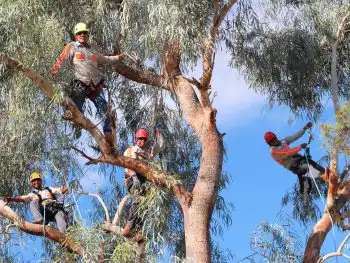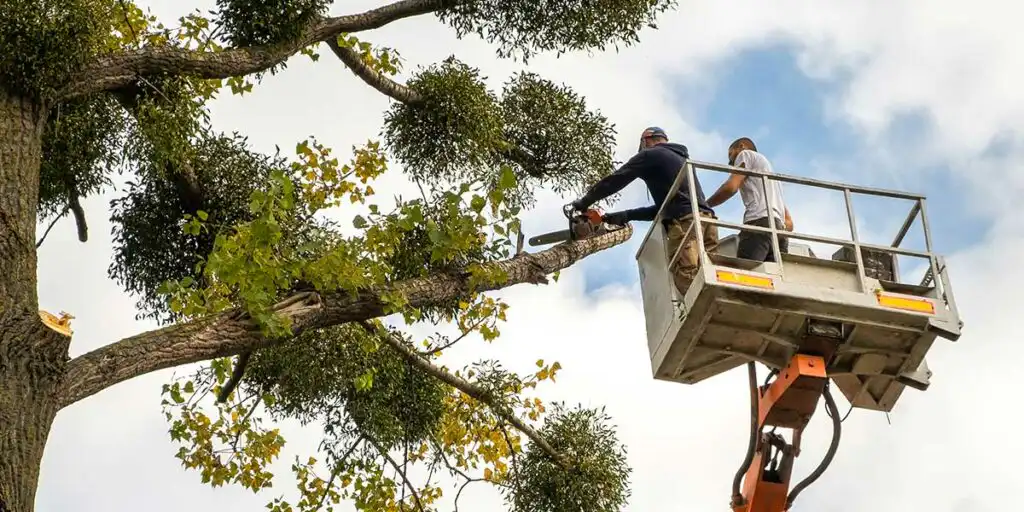
When a tree grows above your roofline, making large cuts across the crown may seem like the fastest way to regain control. This drastic practice, called topping, differs from routine tree trimming in Phoenix, which uses controlled cuts to maintain shape.
This guide answers the question, “Why is tree topping bad?” Design Tree Maintenance explains the damage topping can cause and offers safer ways to manage height.
What Counts as Tree Topping?
Tree topping removes the upper portion of the crown by cutting main stems or large limbs back to blunt stubs. Proper reduction cuts end at lateral branches large enough to support continued growth, while topping ignores that structure.
The result is a flat or abruptly shortened canopy that no longer follows its natural form. Arborists consider this improper tree pruning because the cuts disregard branch structure in favor of a uniform height.
How Does Topping Harm a Tree?
So, why is tree topping bad? The practice causes sudden canopy loss and disrupts tree health and growth in the ways listed below:
- With fewer leaves, the plant produces less food through photosynthesis.
- Large wounds expose internal wood to tree decay and disease.
- Previously shaded bark may develop sunscald after sudden exposure.
In severe cases, topping may cause lasting decline, ultimately killing your trees when they cannot recover between cuts.
Why Can Fast Regrowth Increase Breakage Risk?
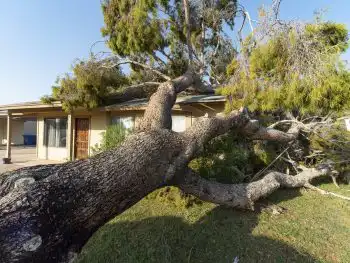
After topping, clusters of upright shoots may form around the cut sites without strong branch unions. As they grow heavier, these weakly attached stems may break during strong winds.
The dangers of tree topping include fast regrowth that looks healthier than it actually is. New stems may return the crown to its previous height within a few years, but they do not rebuild the original structure. You’re left with a bigger problem than you had before.
How Can You Manage Height or Clearance?
The right professional tree pruning approach depends on whether you need to reduce height or clear one obstruction. The options below address each situation without flattening the crown.
Crown Reduction for Height
An arborist shortens selected leaders or limbs back to lateral branches large enough to assume future growth. This reduction lowers the overall height while preserving the tree’s natural shape.
Targeted Pruning for Clearance
If one limb rubs against your roof, selective pruning can create clearance without reducing the entire canopy. The arborist removes only the wood needed to resolve that conflict.
Replacement for a Tree That Has Outgrown Its Space
When a mature specimen is too large for its location, repeated pruning may offer only temporary relief. Replacing it with a species suited to the available space can provide a longer-term solution.
Choose the Right Cuts With Design Tree Maintenance
Now that we have answered the question, “Why is tree topping bad?” you can avoid blunt cuts that lead to weak regrowth and a higher risk of branch failure. At Design Tree Maintenance, our certified arborists assess the crown before recommending pruning or replacement.
Our guide on tree trimming versus pruning explains how those services differ. Call (623) 587-8170 to schedule an assessment.