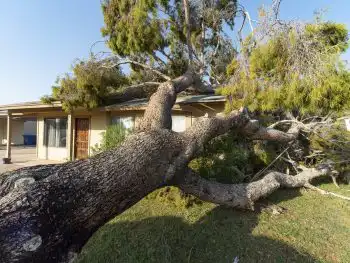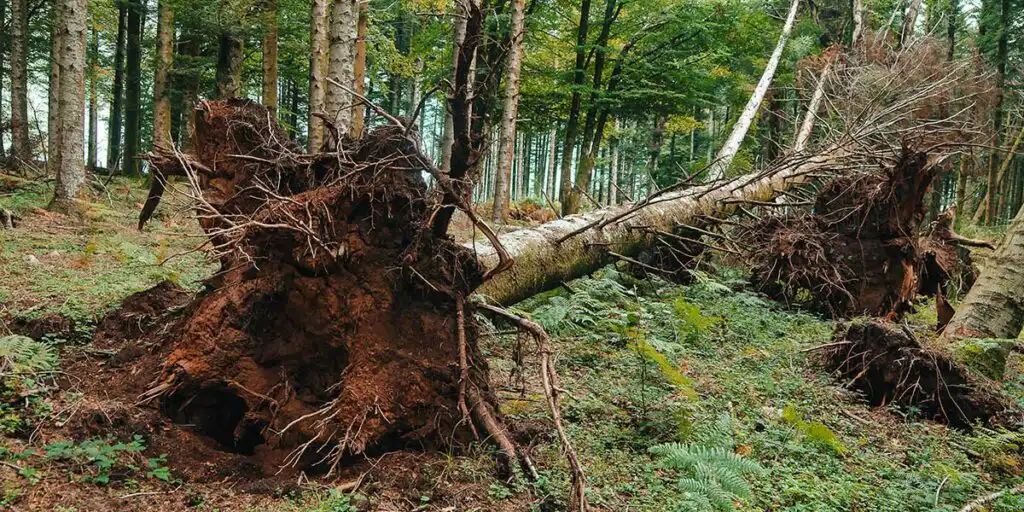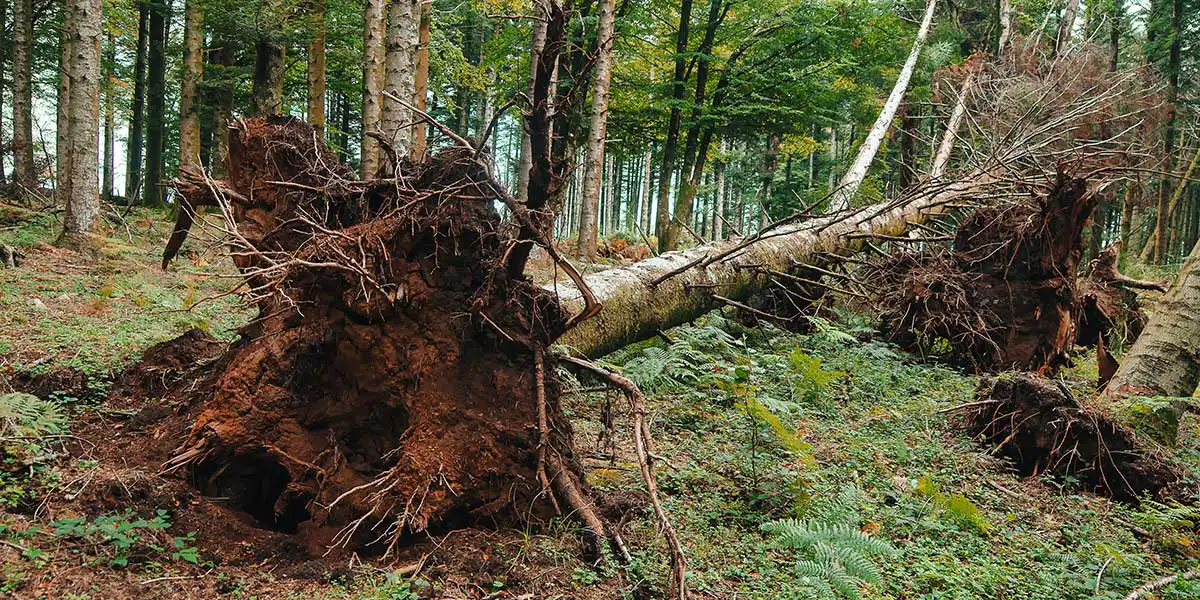
A storm can expose roots and leave the trunk of a tree leaning across your yard, with soil lifted around the base. An emergency tree service in Phoenix can evaluate the damage and determine how urgently the site needs attention.
This guide addresses the question, “Can an uprooted tree be saved?” Design Tree Maintenance explains which factors affect recovery and when replanting may work. You will also learn why removal is sometimes the safer option.
What Should You Do When You Find an Uprooted Tree?
Take these precautions before approaching the damaged area:
- Keep people and pets away from the tree and any hanging branches.
- Stay clear of downed lines or limbs touching them, then report the hazard to the utility company.
- Leave unstable trunks and branches in place until a qualified crew assesses them.
After utility crews clear any electrical hazards, an emergency tree care team can address unstable limbs and reduce the risk of further property damage.
What Happens When a Tree Uproots?
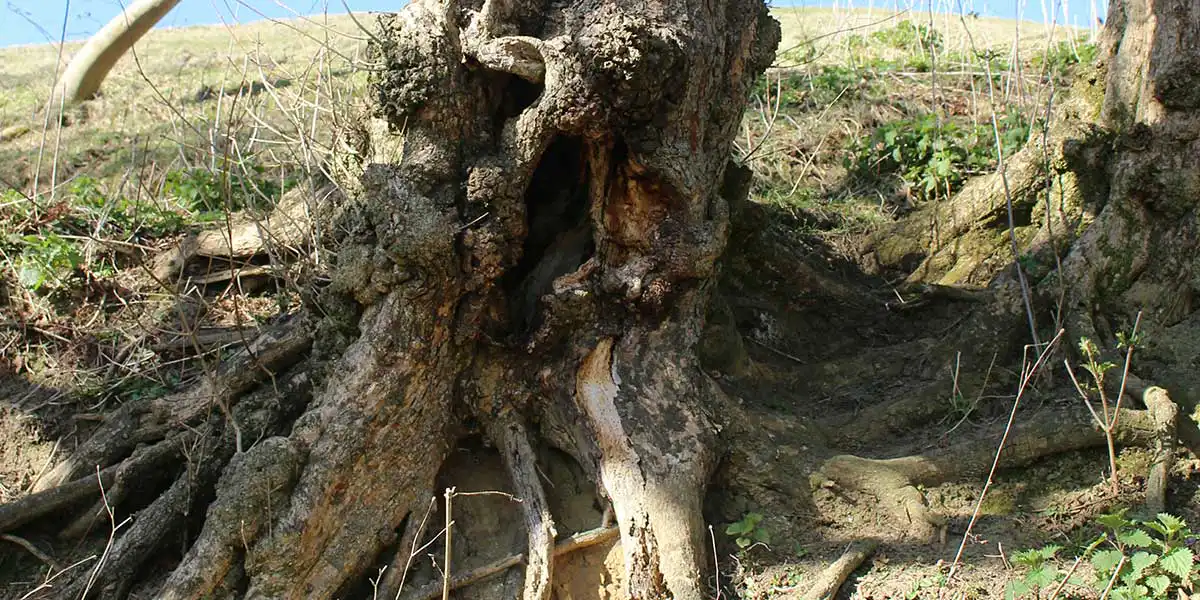
If you are asking, “Can an uprooted tree be saved?” the amount of below-ground damage is a key factor. A trunk may fall completely or shift enough to expose part of its root system. The latter is known as partial uprooting.
Tree root damage can weaken anchorage and reduce water uptake. A look into tree anatomy shows how these plants depend on their underground network for accessing and storing food reserves. When torn sections dry out, the plant may lose stability while struggling to stay hydrated.
Which Uprooted Trees Have a Chance of Recovery?
Small or recently planted trees have the best chance of recovery after partial uprooting. Success is more likely when the trunk remains intact, and exposed roots have not dried out.
As a general guideline, a tree no taller than about 10 feet may be suitable for resetting if at least half of its root system remains intact. Prompt professional assessment is important for immediate tree stabilization and improved chances of recovery.
When Is Removal the Safer Choice?
Removal is usually safer when you see a split trunk or extensive movement at the base. A severe lean toward an occupied building also creates a serious hazard.
An arborist will compare the likelihood of failure with the consequences of keeping a damaged tree in place. If stabilization cannot provide reliable support, taking it down reduces the chance of injury or harm to nearby structures.
How Do Arborists Replant a Tree That Can Be Saved?
Uprooted tree recovery involves a few careful steps conducted by certified arborists:
Protect the Exposed Roots
The crew covers exposed roots with damp burlap or soil while preparing the planting area. Keeping them moist limits additional damage before resetting begins.
Reset the Root Ball
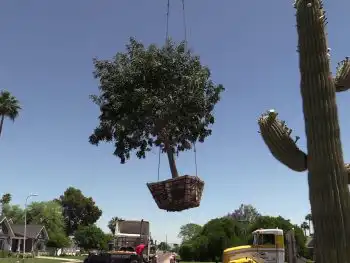
During tree transplanting, the crew returns the root ball to its original depth, with the trunk flare positioned near the surrounding soil surface. Burying this transition point too deeply can restrict oxygen and encourage decay.
Support the Tree While Roots Reestablish
Temporary staking or bracing stabilizes the tree while new roots grow into the surrounding soil and restore anchorage. The arborist will monitor movement and remove the supports once anchorage is stable.
How To Care for the Tree After Replanting
If an arborist confirms that replanting an uprooted tree is appropriate, use the following steps to support root recovery:
- Check soil moisture before adding water, then account for recent rainfall.
- Spread mulch across the root zone, leaving open space around the trunk.
- Avoid fertilizer until your arborist confirms that it is appropriate.
Watering frequency varies with soil type and recent weather, so avoid following a fixed schedule.
What Signs Show Whether the Tree Is Recovering?
New buds during the active season are encouraging signs of recovery in an uprooted tree. Rapid canopy thinning or increasing branch dieback may indicate continued stress.
Check the base after strong wind or irrigation. New cracks in the soil or movement around the root plate may indicate weak anchorage. A worsening lean is another warning that requires professional assessment.
An arborist can evaluate below-ground stability separately from canopy appearance. A tree may produce leaves using stored energy even while damaged roots continue to struggle.
Find Out Whether Your Uprooted Tree Can Be Saved
Now that we have answered the question, “Can an uprooted tree be saved?” a professional assessment can confirm whether replanting or removal is appropriate in your situation. Design Tree Maintenance sends ISA Certified Arborists across the Phoenix Valley to evaluate storm damage.
Review our guidance on safe cleanup after monsoon storms before work begins. Call (623) 587-8170 to schedule an on-site assessment.