Monsoon season in the Valley brings storms that arrive fast and leave damage behind. If one of your trees took a lightning hit overnight, you may be wondering how serious the damage is. Design Tree Maintenance provides emergency tree service in Phoenix for exactly this kind of call.
Knowing what to do when lightning strikes a tree comes down to safety first, then assessment, then deciding whether the tree can stay.
Stay Back Until You Know What You’re Dealing With
Don’t approach the tree if the strike happened within the last few hours. Limbs weakened by the strike can come down without warning, and there’s no reliable way to predict when.
Scan the ground before approaching the trunk. Fallen branches and scorched grass tell you where debris has already landed.
Keep children and pets away from the area entirely. Check nearby fences and utility lines too, since a strike powerful enough to damage a tree can affect what’s around it.
Look for Signs of Damage From a Distance
Lightning travels through the layer beneath the bark, which means much of the harm stays hidden. A tree can look untouched for weeks and then decline rapidly.
Visible indicators do show up in many cases, including:
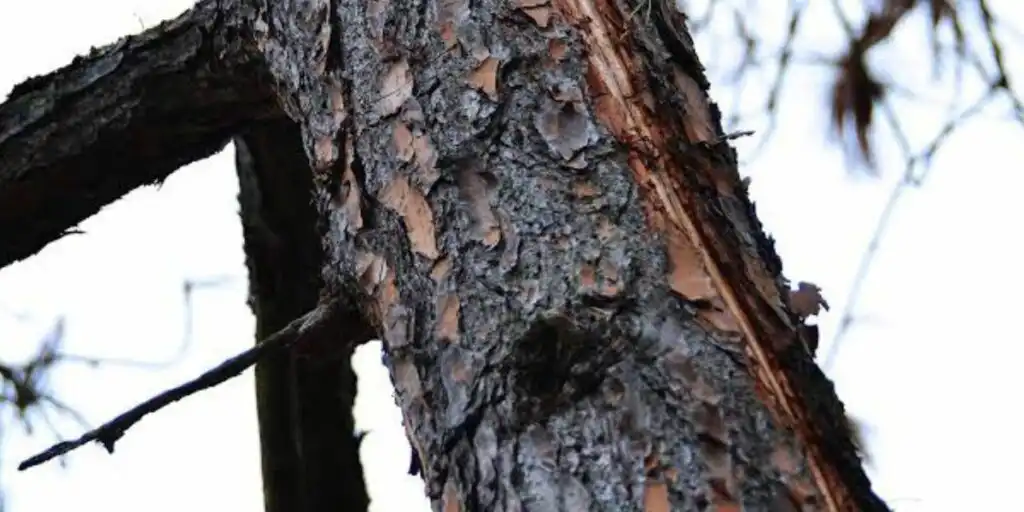
- Vertical cracking: A slit or split running down the length of the trunk
- Missing bark: Chunks blown off, sometimes in a spiral pattern
- Charring: Blackened or burned areas along the trunk
- Sudden leaf drop: Foliage falling from upper branches without seasonal cause
Trunk cracks and peeling bark are among the signs you need to call a tree service because both point to structural damage. Part of knowing what to do when lightning strikes a tree is recognizing when a professional assessment is necessary.
Decide Whether the Tree Has a Chance
Survival of a lightning-damaged tree depends on several factors, and none of them are visible from your kitchen window. Species, age, and overall health before the strike all play a part.
Generally, trees struck on one side of the trunk fare better than those damaged on both sides. Roots left intact also improve the odds considerably. A tree retaining roughly half its canopy with a mostly sound trunk has a reasonable path forward, but that assessment takes weeks to confirm, since effects surface gradually.
Support the Tree While You Wait
These steps help a struggling tree hold on:
- Deep watering: Slow soaking at the base during dry stretches
- Careful pruning: Clean removal of broken limbs by someone qualified
- Mulch application: A layer over the root zone to hold moisture
- Reduced traffic: Keeping equipment and foot traffic off the roots
Watch for pests over the following months because insects and pathogens often invade wounded trees, causing more damage than the original strike.
Recognize When Removal Is the Safer Choice
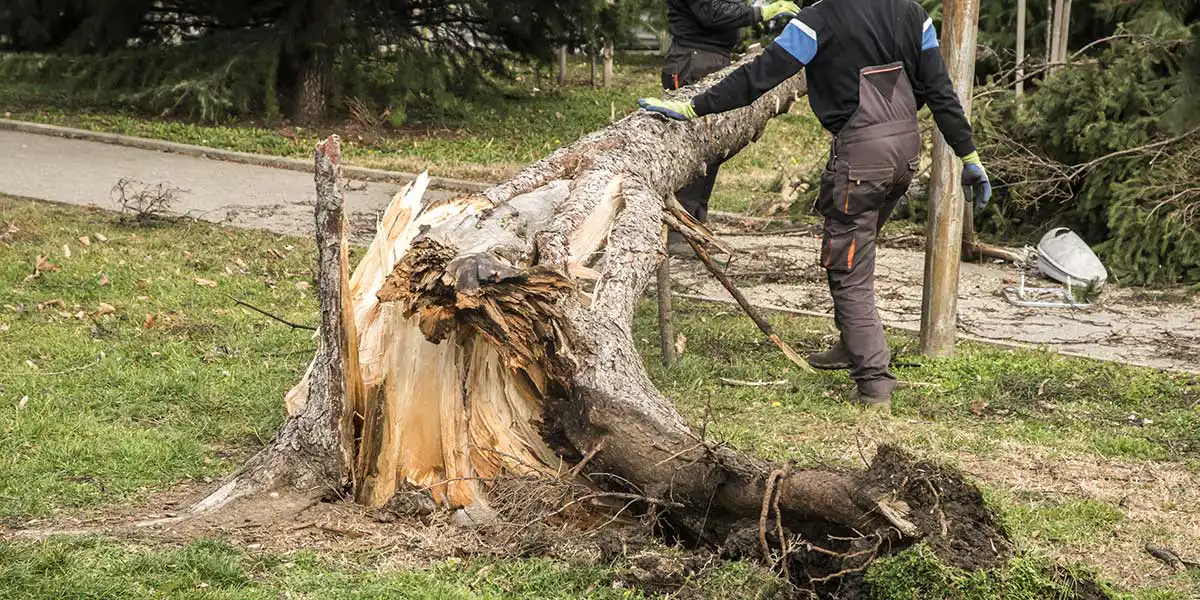
Some trees won’t recover, and a split trunk running through the center is among the clearest indicators. Structural damage deep in the wood leaves the tree brittle and unpredictable.
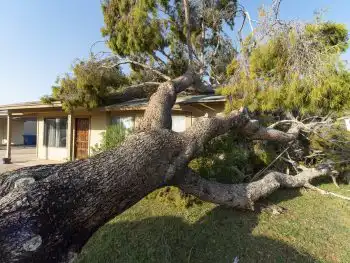
Falling branches from a compromised canopy can injure people or damage what sits below. When you’re weighing what to do when lightning strikes a tree that’s already leaning, tree removal becomes a safety measure rather than a last resort.
Why This Work Requires Professionals
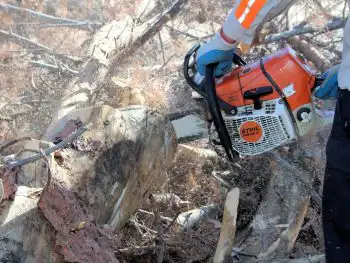
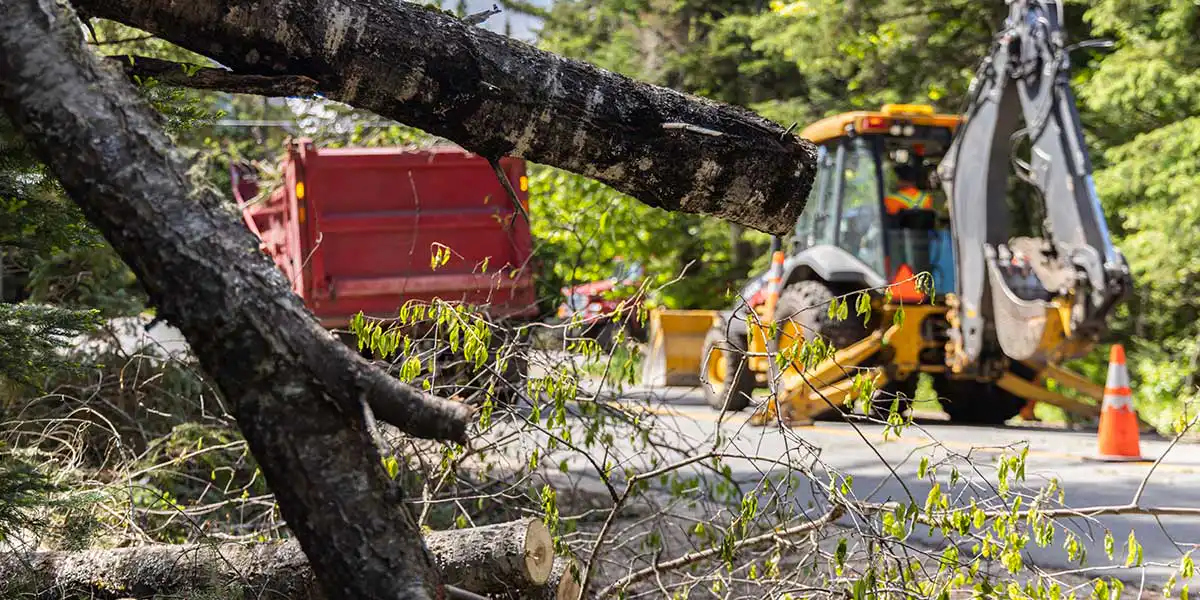
Lightning-struck trees behave differently than healthy ones during removal. Internal burning creates weak points that aren’t visible from outside, so a trunk that looks solid can fail mid-cut.
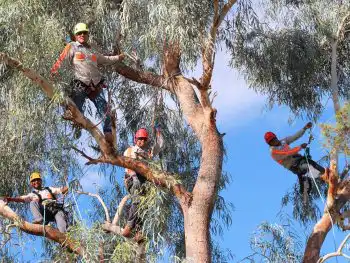
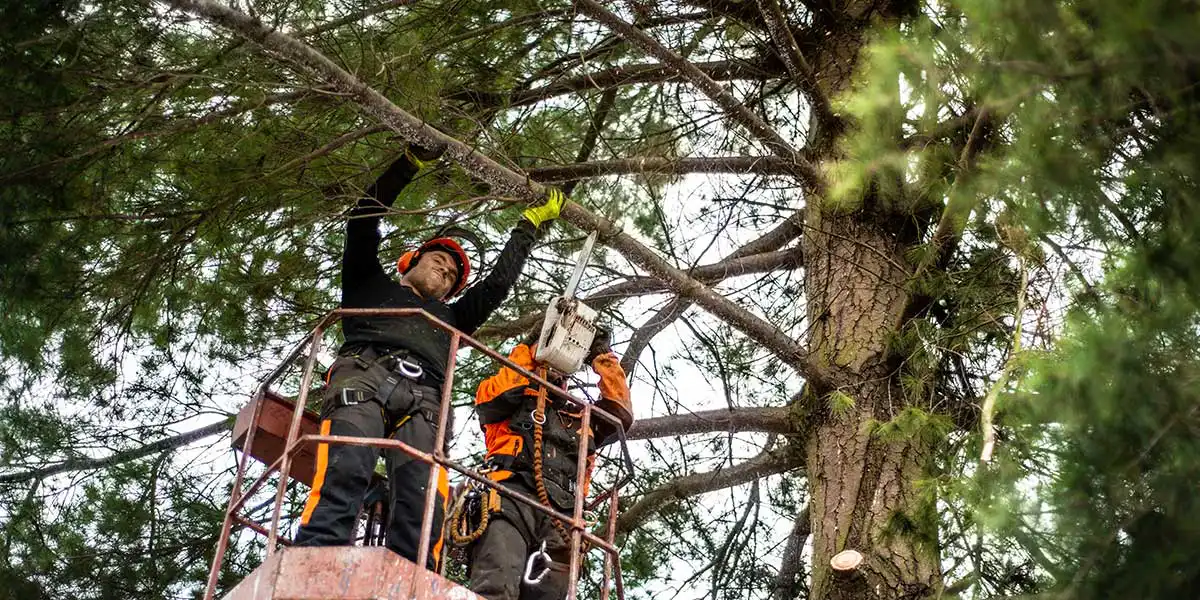
Proximity to power lines or structures raises the stakes further. Licensed crews carry the rigging equipment and training to bring a compromised tree down in controlled sections rather than dropping it whole.
Protect What You Can Before the Next Storm
Lightning protection systems divert current away from the tree and into the ground through cables and rods. These work best on tall specimens standing alone. Proper pruning and removing dead limbs also help trees handle storm stress better.
No system guarantees protection. A certified arborist can tell you whether a particular tree justifies the investment.
Get an Assessment Before the Damage Spreads
Understanding what to do when lightning strikes a tree gives you a clear path. Our team at Design Tree Maintenance inspects storm-damaged trees and advises on whether recovery or removal makes more sense for your property.
Operating under ROC #330404 with over 30 years of experience and three BBB Ethics Awards, we handle trimming, removal, stump grinding, and plant health care. Call Design Tree Maintenance at (623) 587-8170 for a storm damage assessment in Phoenix, AZ. We also explain what to expect from an emergency tree service before you call.