
Monsoon season in Phoenix is dramatic. One minute the sky is clear. The next, sideways rain hits, winds roar past 60 miles per hour, and that palo verde in your yard suddenly looks… questionable.
Here is the hard truth.
Tree removal after monsoon storms is sometimes necessary. But not always.
Knowing the difference between a tree that looks bad and a tree that is dangerous takes experience.
Let’s break down what is safe, what is not, and when professional tree removal becomes the smartest and safest decision.
Why Monsoons Lead to Tree Removal in Phoenix
Arizona trees are resilient. They tolerate drought, reflected heat, alkaline soils, and intense sun exposure.
But monsoon storms test structural integrity in ways summer heat never does.
High winds expose:
- Shallow root systems restricted by caliche
- Over-pruning or lion-tailing
- Weak branch unions
- Internal trunk decay
- Prior lightning damage
For example, the University of Arizona notes that lightning strikes in palms can cause sudden crown collapse or terminal bud failure, often requiring removal when structural stability is lost (Arizona Landscape Palms and Their Management).
Storm stress can also accelerate decline in trees weakened by fungal diseases such as sooty canker (Sooty Canker).
In many cases, the storm did not create the weakness.
It exposed it.
What’s Safe After a Monsoon Storm
Not every damaged tree requires tree removal. Sometimes corrective pruning is enough.
Damage that may be manageable includes:
- Small broken limbs under 3 inches in diameter
- Minor canopy thinning
- Surface branch cracks without trunk involvement
- Temporary leaf drop
- Cosmetic bark stripping
For example, a mature mesquite near Camelback Mountain might lose peripheral branches but still retain strong structural roots and a solid trunk. In that case, strategic pruning restores balance and safety.
The key question is not “Does it look ugly?”
The real question is, “Has the structural stability been compromised?”
When Tree Removal Is Necessary
Now we enter the danger zone.
Professional tree removal becomes the safest option when you see the following:
1. Root Plate Lifting
If soil has heaved and you can see exposed roots, especially on the windward side, that tree is unstable. Root failure rarely corrects itself.
2. Major Trunk Splits
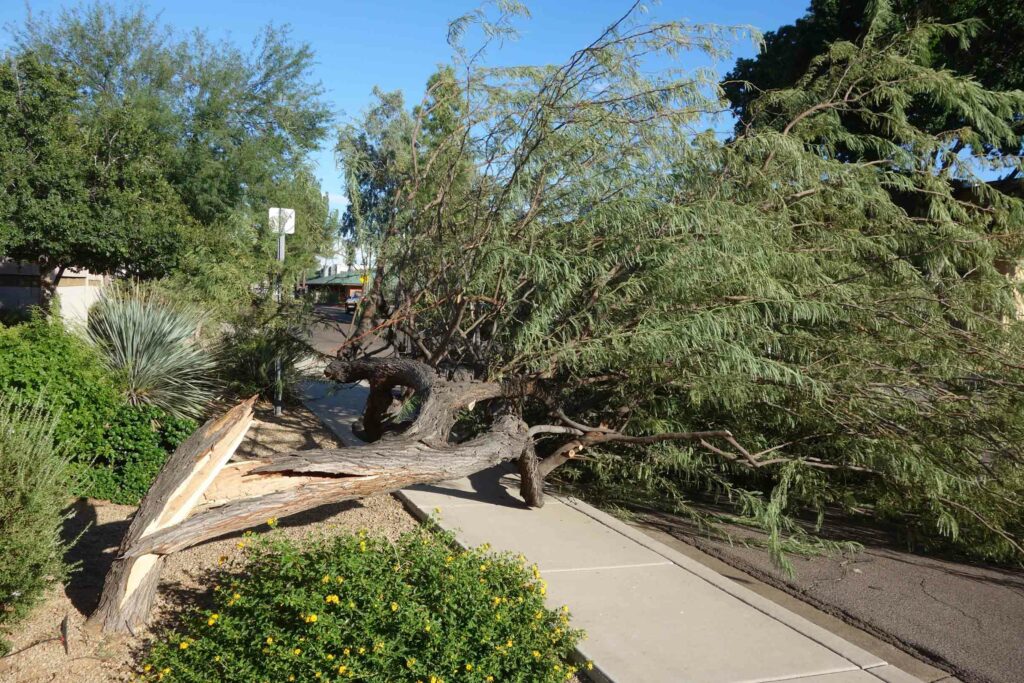
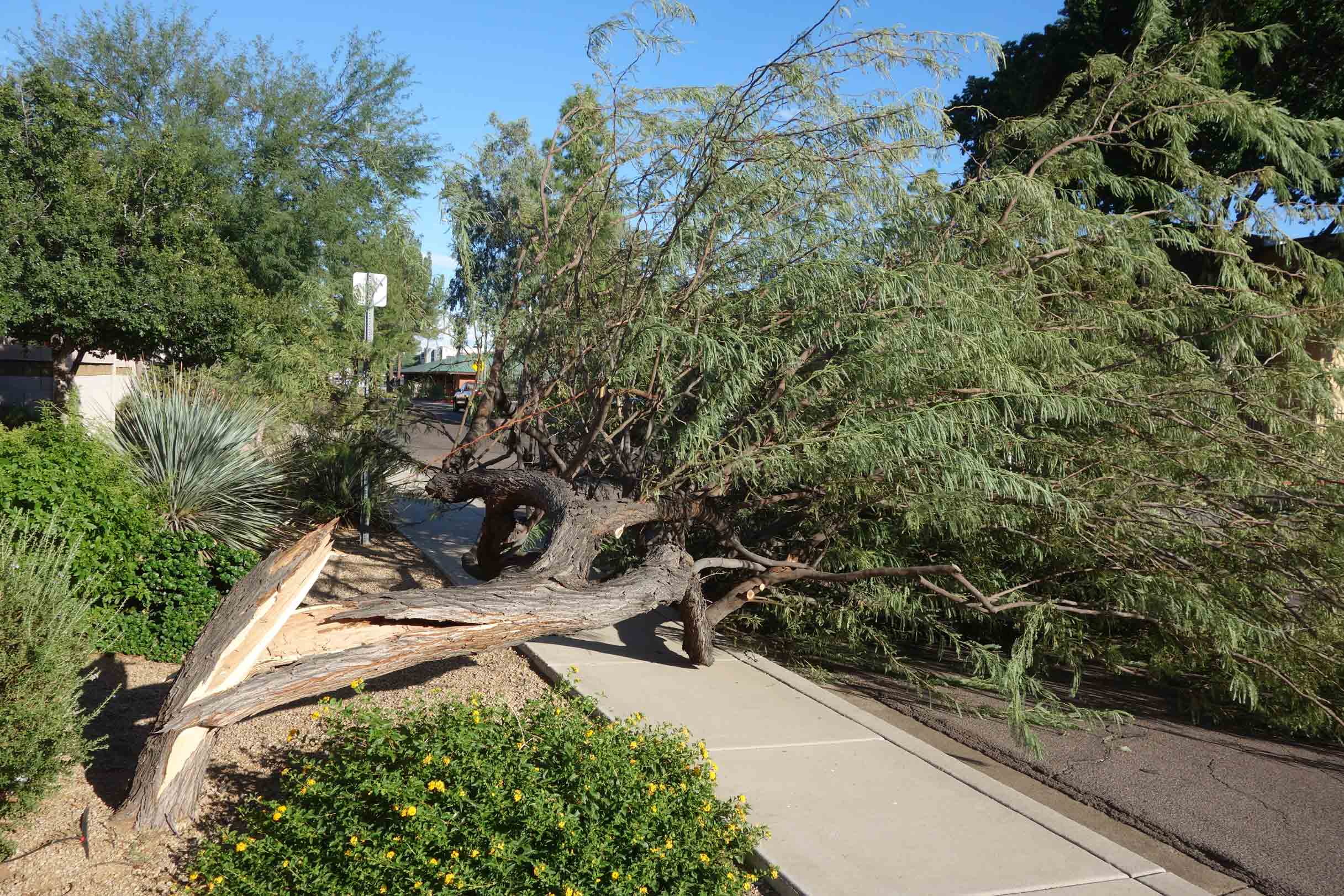
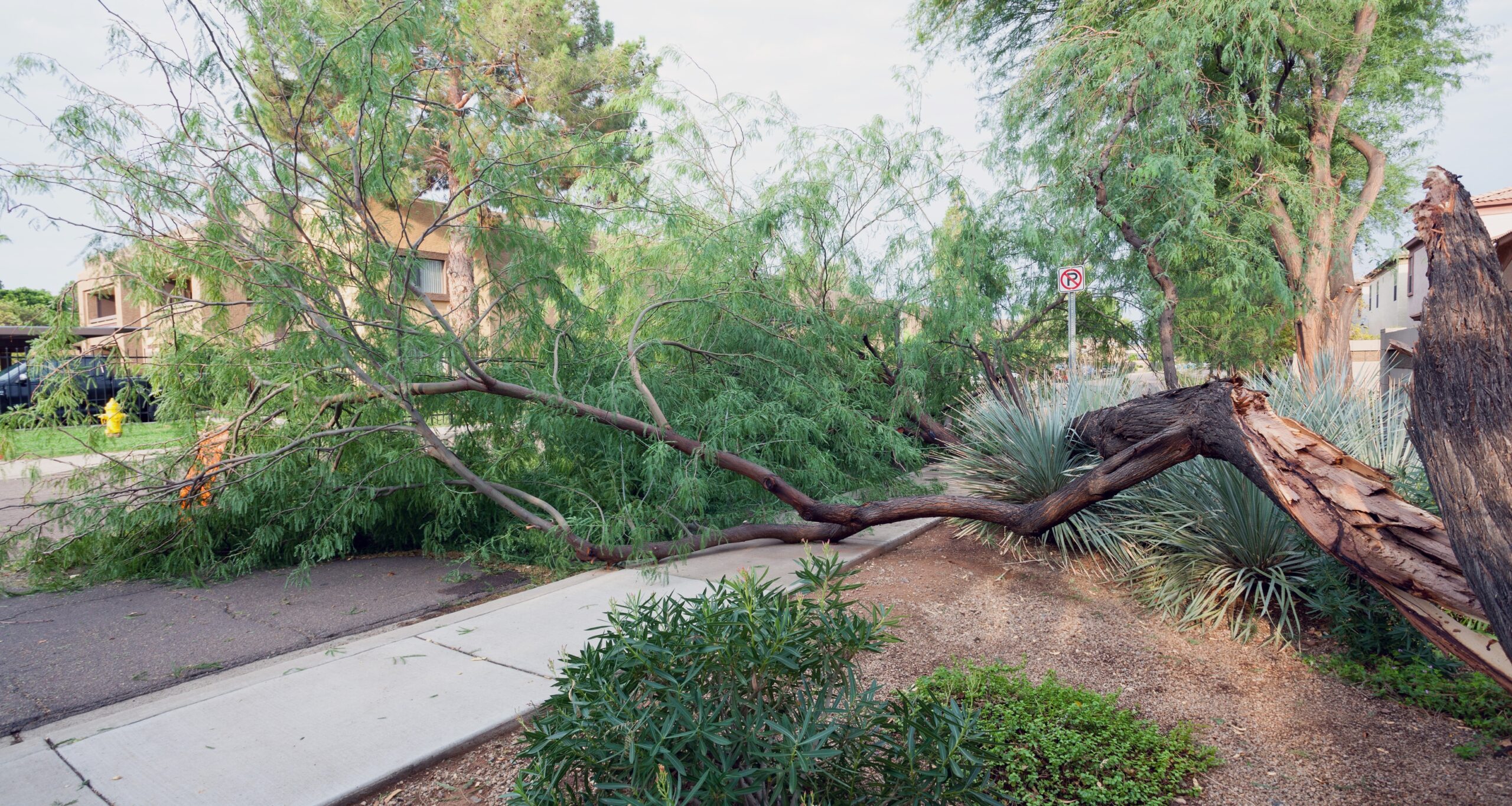
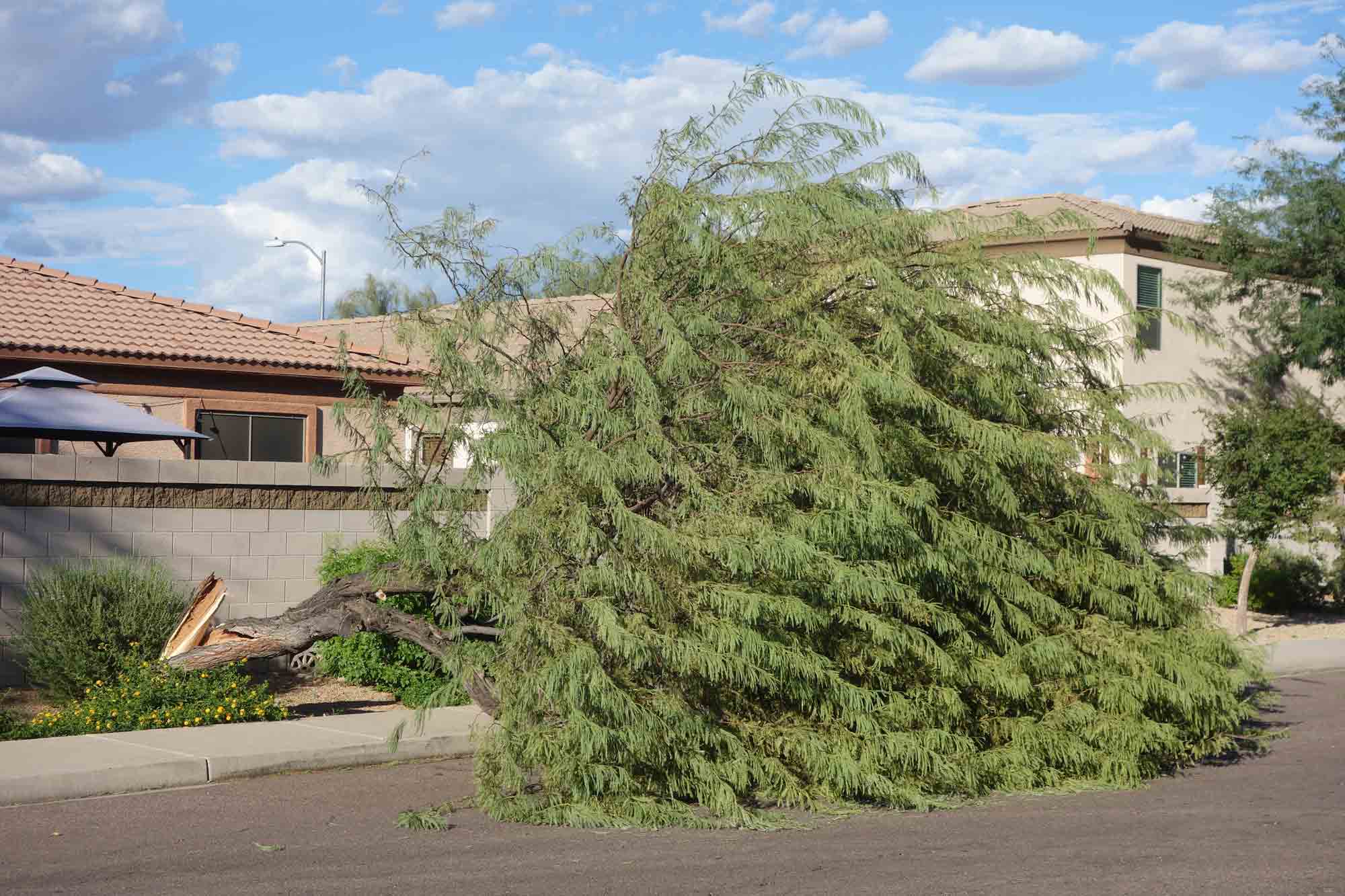
Vertical trunk splits or co-dominant stems separating are serious hazards. Even if the canopy remains upright, structural integrity is compromised.
3. Severe Leaning
A newly leaning tree, especially one that shifted during saturated soil conditions, often signals root failure.
4. Hanging or Suspended Limbs
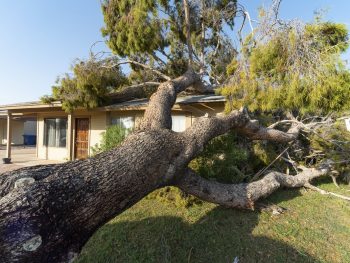
Broken limbs lodged high in the canopy are unpredictable and dangerous. These are often called widowmakers for a reason.
5. Advanced Disease Exposure
Storm wounds create entry points for pathogens. Trees already weakened by fungal diseases such as Seiridium canker often decline rapidly after storm injury (Seiridium Canker of Cypress Trees in Arizona).
When disease and structural damage combine, tree removal is usually the safest long-term solution.
The Hidden Danger of “It’s Still Standing”
Just because a tree survived the storm does not mean it is stable.
Arizona soils, especially those with caliche layers, restrict deep root penetration. After heavy rainfall, compacted soils lose cohesion. Trees that relied on shallow lateral roots can begin failing days or even weeks later.
This delayed collapse is common in Phoenix neighborhoods with dense irrigation zones.
Tree removal is sometimes a preventative safety decision, not just a reaction to visible damage.
Frequently Asked Questions About Tree Removal After Monsoon Storms
How do I know if my tree will fall?
Look for soil lifting, fresh leaning, trunk cracks, or exposed roots. If unsure, have a certified arborist assess it immediately.
Can a leaning tree be saved?
Sometimes. If the lean is minor and roots are intact, staking may help. If the root plate shifted, tree removal is usually required.
Should I remove a tree with lightning damage?
If the terminal bud or trunk core is destroyed, removal is often necessary, especially with palms.
Is emergency tree removal covered by insurance?
Often yes, if the tree damaged a structure. Coverage varies, so check your policy details.
Prevention Is Cheaper Than Emergency Tree Removal
Most monsoon-related tree removal cases are preventable.
Smart strategies include:
- Structural pruning before monsoon season
- Soil treatments that improve root development
- Deep irrigation practices that promote stronger anchoring
- Avoiding over-thinning of desert-adapted trees
Trees that are over-pruned catch more wind. Trees with shallow roots tip faster. Trees weakened by nutrient deficiencies struggle to compartmentalize storm wounds.
Fortitude in tree care means doing the maintenance before the dramatic storm.
Final Thoughts on Tree Removal After Monsoon Storms
Monsoons are not going anywhere.
The goal is not to remove trees unnecessarily. The goal is to preserve healthy trees and remove hazardous ones before they injure someone or damage property.
If your tree looks questionable after a storm, do not guess.
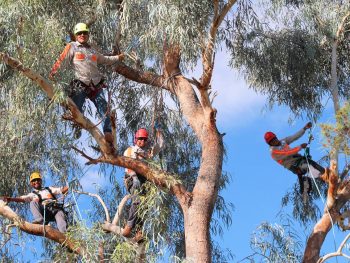
Have it evaluated by ISA Certified Arborists who follow ANSI standards and prioritize preservation first, removal when safety demands it.
Need Professional Tree Removal After a Storm?
If you are in Phoenix, Scottsdale, Tempe, Mesa, or surrounding communities and are unsure whether your tree needs removal, our certified team at Design Tree Maintenance is here to help.
We provide:
- Emergency storm response
- Hazard evaluations
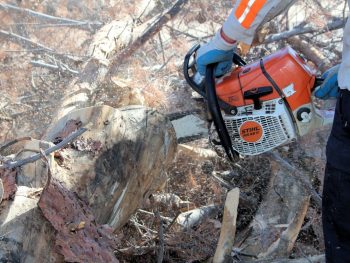
- Safe, precise tree removal
- Ethical recommendations rooted in science
Call 623-587-8170 or email [email protected] to schedule a professional assessment today.
Because when it comes to storm-damaged trees, guessing is not a strategy.