Strong winds can reveal structural problems in your trees that may not be visible in low-wind conditions. A cracked limb hanging over a driveway may signal internal weakness, making you question whether other trees on your property are stable.
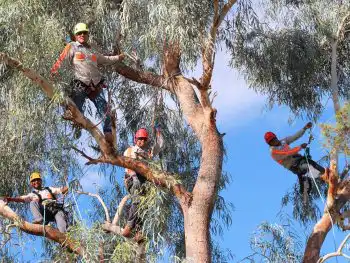
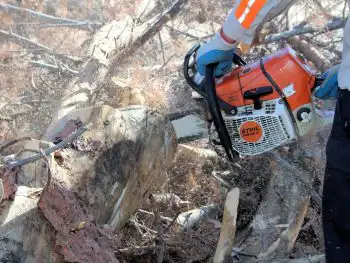
Design Tree Maintenance explains how much wind a tree can withstand and what factors affect that risk. This guide covers common causes of tree failure and explains when emergency tree service may be needed after storm damage.
How Much Wind Can a Tree Withstand Before It Fails?
Many property owners ask how much wind a tree can withstand during severe weather. The answer depends on the tree’s health and root support.
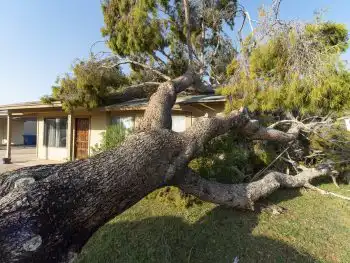
Healthy trees can often withstand gusts of up to 60 mph without major damage. Once winds reach 70 mph or higher, weak limbs and compromised trunks face a higher risk of failure. At that point, existing decay or poor structure can turn minor weakness into serious storm damage. A fallen tree can also raise questions about who is responsible for tree removal or create hazardous situations like downed power lines in residential yards.
Common Types of Wind Damage You Should Recognize
Wind can weaken branches or expose hidden defects before a tree fails. A fallen tree can also raise questions about who is responsible for tree removal. Common forms of wind damage include:
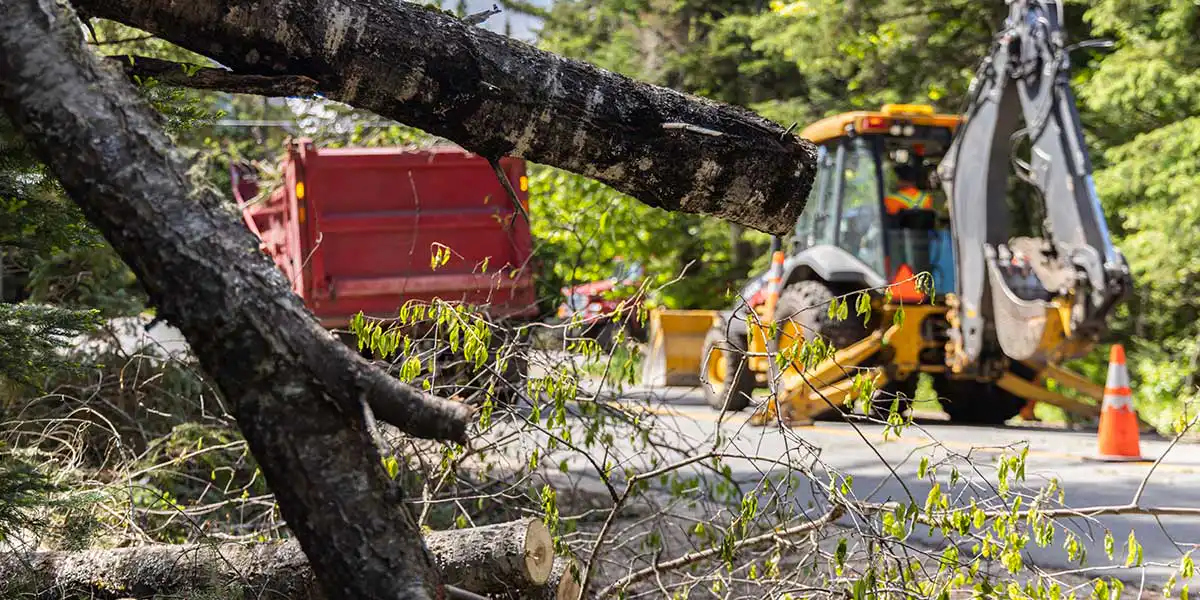
- Broken branches: Limbs can snap when strong gusts place stress on wide or overextended growth. Fresh breaks may leave open wounds, exposing the tree to decay.
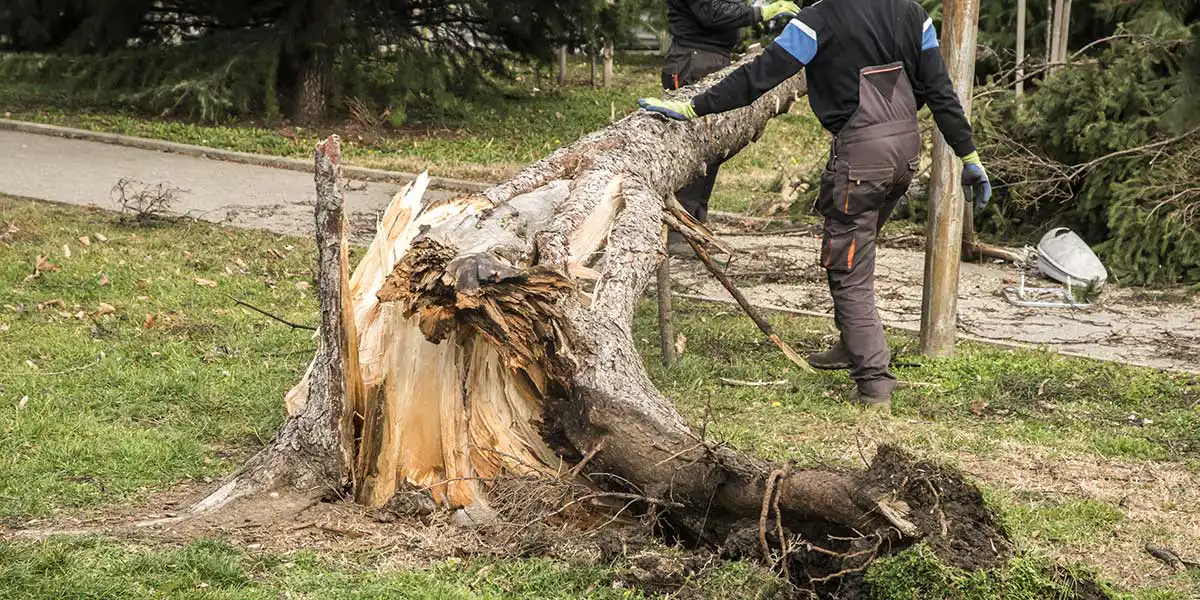
- Trunk fractures: Sudden wind pressure can split trunks, especially when decay has weakened the wood. Large cracks may affect the tree’s stability and require professional inspection.
- Complete uprooting: Saturated soil can reduce root support during severe weather. Weak anchoring may also allow the tree to pull fully out of the ground.
Key Factors That Affect Tree Wind Resistance
Wind pressure affects every tree differently during a storm. The sections below explain the main conditions that affect wind resistance.
Soil Conditions and Anchoring
Soil conditions affect how firmly a tree holds during strong winds. Loose soil may provide limited support around the root zone. Waterlogged ground also increases the risk of uprooting because saturated soil loses stability.
Root System Strength
Root depth and density strongly affect wind resistance. Shallow roots provide less support when wind pushes against the trunk. Restricted root growth near pavement can weaken anchoring during storms.
Tree Age and Flexibility
Some older trees become less flexible as their size and structure change over time. This can make branches and trunks more likely to crack under pressure. Younger healthy trees often bend more easily during strong gusts.
Tree Health and Structural Integrity
Disease and pest activity can weaken wood over time. Decay inside branches or trunks can reduce structural integrity before damage is visible. This can make limbs or trunks more likely to crack during strong winds.
Canopy Density and Pruning
A dense canopy can catch more wind during severe weather. This increases stress on branches and the main trunk. Proper pruning can reduce wind load while preserving healthy structure. Poor cuts can create weak attachment points.
Tree Species and Wood Type
Species affects wind speed tolerance because trees differ in wood strength. Whereas some species have flexible branches that bend under pressure, others have brittle wood that may snap during severe weather.
Site Exposure
Trees in open areas often experience stronger wind pressure than those in sheltered areas, as nearby structures can block the flow of air. Trees on slopes may face a higher failure risk when the soil is unstable or when erosion affects root support.
Steps You Can Take To Reduce Storm Damage Risk
Trees are more vulnerable when small issues are left untreated. The following steps cover ways to reduce storm damage risk:
- Regular pruning: Removing dead or overextended limbs reduces the risk of breakage during strong gusts. Proper crown thinning can also reduce wind load on the tree.
- Soil improvements: Aerating compacted ground and adding mulch correctly can support root system strength. Healthier roots can improve anchoring during heavy winds.
- Pest and disease checks: Treating infestations early helps protect living wood from decay. This can reduce hidden weakness in branches or trunks.
Trust Design Tree Maintenance To Keep Your Trees Storm Ready
Understanding how much wind a tree can withstand can help you address storm risks before tree damage occurs. Design Tree Maintenance helps property owners prepare for storms through professional tree care and timely inspections.
Whether you need a routine assessment or urgent help after a windstorm, our team is ready to step in. Call us at (623) 587-8170 today and let Design Tree Maintenance safeguard your property long before the next big storm rolls through.